
Chemex Brew Guide: How to Brew Coffee Using a Chemex
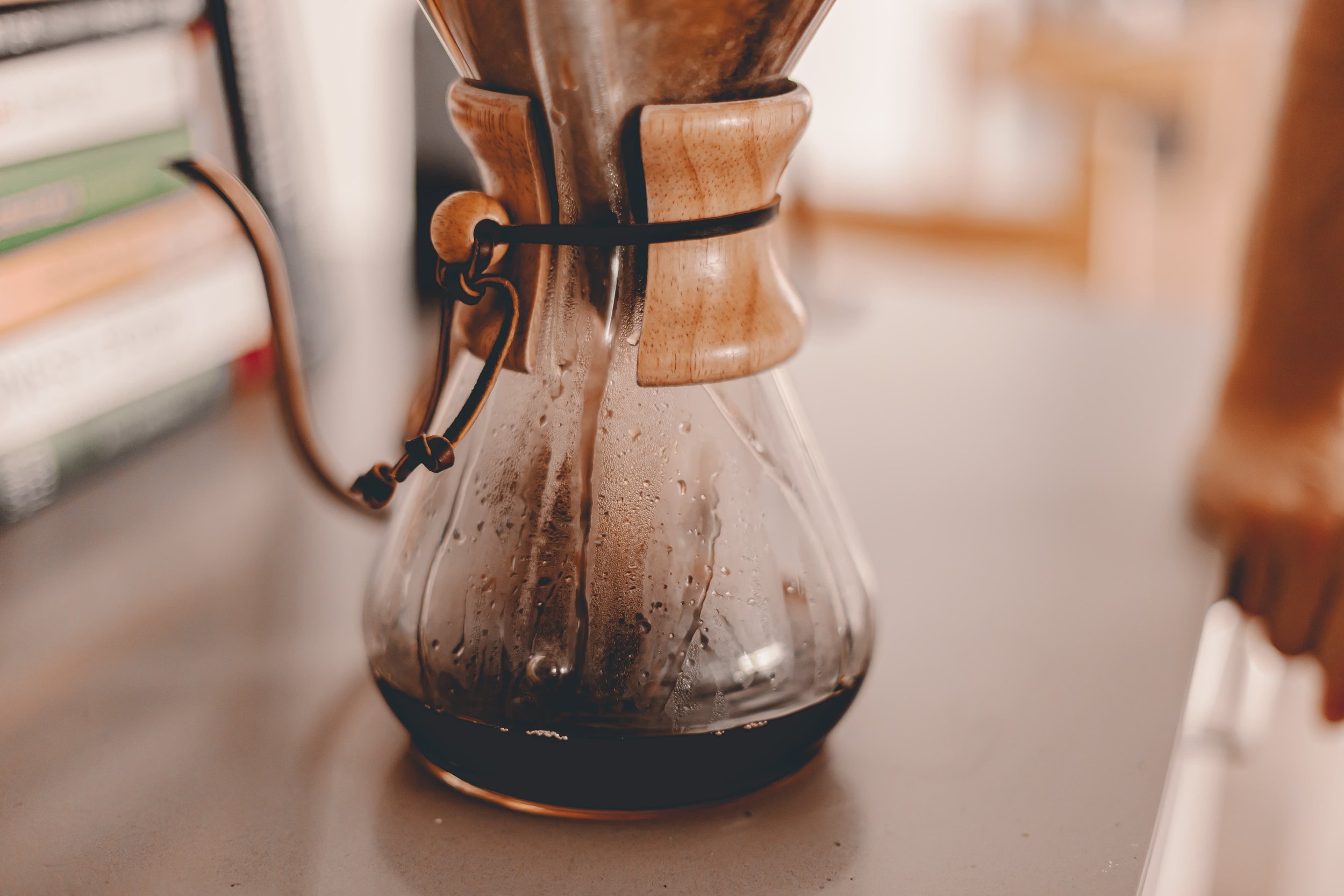
If you’ve spent any time hanging out at our coffee bar, you already know we are absolute suckers for great design. And when it comes to the specialty coffee world, nothing quite matches the timeless, mid-century elegance of the Chemex. Invented in 1941 by Dr. Peter Schlumbohm, this single piece of glass has graced everything from the Museum of Modern Art to classic pop culture moments in Friends, Mad Men, and Interstellar.
But the Chemex isn't just a pretty piece of cinema history to keep on your kitchen counter. It’s an exceptional tool for batch brewing an incredibly vibrant cup of coffee to share with friends. Today, we’re breaking down the ultimate manual setup, pairing this iconic glass carafe with our Knoxville specialty coffee shop’s signature house favorite: the Calico Blend. Let's get into the ritual.
Chemex Gear Checklist & What You Need
To get those perfect counter vibes going, you'll want to gather a few reliable pieces of gear. Here is your baseline lineup:
The Beans: 30g of Mia Piccola’s Calico Blend.
The Glassware: A classic 6-Cup or 8-Cup Chemex.
The Filter: Proprietary Chemex Bonded Paper Filters.
The Kettle: A gooseneck kettle filled with filtered water heated to 204°F (or just under a rolling boil).
The Scale & Timer: Essential for keeping your flow rate steady and honest.
How to Fold and Rinse a Chemex Filter
The real magic of a Chemex actually comes down to the physics of its filter. Chemex paper is incredibly dense—weighing nearly three times more than a standard pour-over filter (a massive 4.5 grams compared to a tiny 1.5-gram Hario V60 paper). This heavy paper is a master at trapping oils and removing almost all suspended material, which is why Chemex coffee tastes so remarkably crisp and clean.
Because it’s a single piece of glass, the Chemex presents a unique structural challenge: as hot coffee drips into the lower basin, air has to escape from the bottom chamber. If air cannot freely flow out to be displaced by the incoming coffee, pressure builds up and your brew stalls.
To prevent this, unfold your square or circular paper filter so that exactly three layers face the front pouring spout, and one single layer faces the back. The triple-ply side acts as a rigid shield, keeping the heavy paper from collapsing into the glass spout channel so air can freely vent.
Pro-tip: Give that heavy paper a massive rinse with hot water before adding your coffee to wash away any potential paper taste. Dump that rinse water out of the spout, check that the paper is still sitting tight across the gap, and you're ready to go.
Ideal Chemex Ratio & Grind Size
If you look up a pour-over guide online, they’ll usually tell you that your coffee needs to finish draining in a strict three-to-four-minute window. We are here to tell you to throw that rule out the window for the Chemex.
Because the bonded paper is so thick, it introduces a ton of natural resistance. If you try to force a standard short brew time by grinding way too fine, you'll just end up clogging the system. Instead, accept that a relaxed four-to-five-minute total extraction window is completely normal and expected when brewing half a liter here.
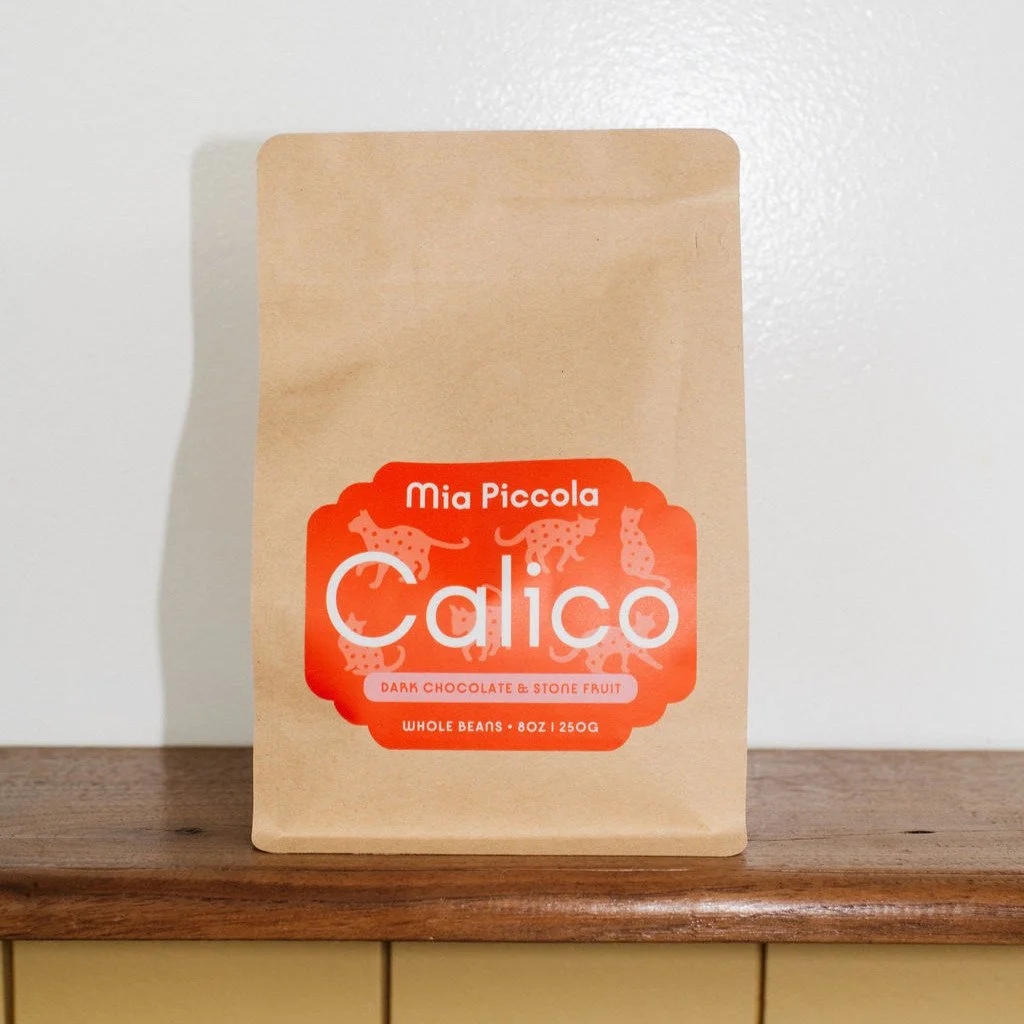
To complement this slower timeline, your ideal grind size needs to be coarse, resembling kosher salt or sea salt. This matches perfectly with our versatile Calico Blend. Inspired by the playful street cats of Southern Italy, Calico balances a rich South American chocolate base with a juicy East African stone fruit brightness. The dense filtration of the Chemex masterfully clarifies the brew, allowing that crisp stone fruit acidity to pop beautifully while keeping the finish clean, balanced, and sweet.
Step-by-Step Chemex Brewing Instructions
We are anchoring this recipe inspired by James Hoffman around a golden 60 grams of coffee per liter ratio matrix. Drop your 30g of coarse Calico Blend into the rinsed filter, shake it to level the bed, and tare your scale.
0:00 – 0:45 | The Bloom (60g – 90g): Start your timer. Pour roughly double to triple your coffee weight (60g to 90g of water) over the grounds to completely saturate the bed. Let it bloom and degas for at least 45 seconds.
0:45 – 3:15 | The Core Stream: Begin a smooth, continuous spiral from the center outward, and then back inward. Keep your stream focused in the center core—never pour water directly onto the bare paper walls. Slowly and steadily ease your water volume into the center of the cone until your scale reads exactly 500g.
3:15 – 5:00 | The Drawdown, Stir, and Swirl: At the very end of your pour, give the slurry a little stir and then a gentle swirl. This helps the drawdown settle into a clean, flat bed of grounds. Now, let gravity handle the rest. Once the filter drops dry, lift it out and toss it.
Before pouring a cup, give the glass carafe a beautiful, sweeping swirl to oxygenate the layers. We drink with our eyes first, and the specific curvature of the Chemex basin catches the light rays perfectly, making the coffee look incredibly vibrant, red, and beautiful.
Troubleshooting a Stalled Chemex Brew
The most common headache with a Chemex is "the stall"—when the water completely stops moving and leaves you with a muddy puddle. If your paper filter accidentally slips and forms a perfect vacuum seal over the spout, your air channel closes, and the flow freezes.
If you find yourself in an airlock emergency, you can deploy a clever insider hack popularized by coffee expert James Hoffmann: slip a clean, high-quality stainless steel chopstick down into the spout groove between the glass and the paper. This mechanically forces the air channel to stay open so your brew can finish cleanly without stalling out. (Just skip the cheap, disposable wooden ones so you don't ruin the flavor flavor!).
On the other hand, if your air channel is clear but the brew still drags past 5:30 and tastes unpleasantly bitter, your grind is simply too fine, causing micro-particles to clog the paper pores. Nudge your grinder a step coarser next time. If it finishes too fast and tastes thin or sour, adjust a bit finer.
Pour it out, enjoy the good vibes, and let our specialty coffee baristas in Knoxville know how your batch turned out!
This guide was built with love by Mia Piccola, drawing technical insights, history, and structural expertise directly from the coffee icon analysis published by James Hoffmann.